

Pipeline Purpose and Reliability
Williams operates pipelines near you. Williams’ pipelines and facilities are part of a vast national network of underground pipelines. This system is our country’s lifeline for a variety of daily activities. From natural gas to heating oil, from water to jet fuel, pipelines reliably deliver products many of us take for granted, but which are essential to our nation’s economy and standard of living.
Some pipelines transport potentially hazardous and flammable substances under high pressure. Yet, according to statistics from the National Transportation Safety Board and the U.S. Department of Transportation (DOT), pipelines are one of the safest modes of transportation in the United States.
Living and Working Safely Around Williams Pipelines
Using this information as part of your digging projects will keep you and your community safe.
For more information about digging safely around our pipelines or anything else, you can contact us at:
- Non-emergency phone number: 1-800-WILLIAMS (1-800-945-5426)
- For more information about pipeline safety, visit www.williams.com/safety
- You can also contact us at PublicSafety@Williams.com

RIGHT-OF-WAY ENCROACHMENTS
If a pipeline crosses your property, do not plant trees, high shrubs or any vegetation that would impede access to the right-of-way. Likewise, do not dig, excavate, operate heavy equipment, build, store or place anything on the right-of-way.
Recognizing A Right-Of-Way and Pipeline Marker
A pipeline right-of-way is a strip of land over and around a pipeline where some of the property owner's legal rights have been granted to a pipeline company.
Pipeline rights-of-way must be kept free from structures and other obstructions for your safety and to provide access for maintenance and in the event of an emergency.
Pipeline markers are found within the pipeline right-of way.
Pipeline Markers
- Indicate approximate location. They cannot be used to determine exact location or depth.
- Can be found where lines meet at public access points, aboveground facilities, streets, highways, waterways and intersections.
- Display the pipeline operator's name, emergency number and product transported.


DAMAGING OR DISTURBING A PIPELINE
Williams maintains a Damage Prevention Program in accordance with state and federal guidelines. If you cause or witness even minor damage to a pipeline or its protective coating, please immediately notify Williams. Even a small disturbance to a pipeline may cause a future leak. A gouge, scrape, dent or crease is cause enough for Williams to inspect the damage and make repairs. Do not cover a pipeline that has been damaged.
Recognizing A Pipeline Leak USING YOUR SENSES
Although pipeline leaks are uncommon, it is important to be able to recognize the warning signs using sight, sound and smell. Leaks could be in a liquid or gaseous state.
Note: All of these signs may not be evident at the same time.
Sight
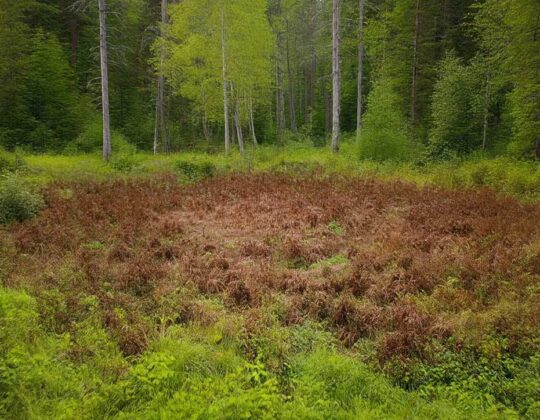
- Discolored or dead vegetation
- Flames coming from the ground
- A cloud of vapor, fog or mist
- A pool of liquid on the ground or bubbling in a wet, flooded area
- Dirt blowing in the area
- A rainbow or sheen on the water
Smell
- An unusual odor or scent of gas, petroleum liquids or a slight hydrocarbon smell
- The products in Williams pipelines are primarily odorless, but may contain a rotten-egg smell from the odorant, Mercaptan
- Hydrogen Sulfide will carry a pungent, rotten-egg odor
Sound
- An unusual hissing or roaring noise coming from a pipeline



Responding To A Pipeline Leak
Follow these basic Do's and Do Not's to remain safe during a pipeline leak:
- Leave the immediate area on foot! Move in a crosswind direction away from the leak or vapor cloud and maintain a safe distance. Abandon any equipment being used in or near the area.
- Go directly to a safe location, and then call 911 and Williams' emergency number at 855-945-5762.
- Warn others to stay away from the leak.

- Cause any open flame or other potential source of ignition such as an electrical switch, vehicle ignition, lighting a match, ringing a doorbell, etc.
- Come into direct contact with any escaping liquids or gas.
- Drive into a leak or vapor cloud while leaving the area.
- Attempt to operate any pipeline valves yourself. You may inadvertently route more product to the leak or cause a secondary incident.
- Attempt to extinguish a natural gas fire.
- Use telephones (including cell phones) or anything that could cause a spark.
- Use email, text or the internet to contact the company about a leak, and never assume someone else has reported the leak.

Williams Response To A Leak
Williams strives to build partnerships with the emergency response community to share resources and provide education for a safe response to a pipeline emergency.
- Arrive at the site of a pipeline emergency and stop or reduce product flow to the area.
- Notify and work with the appropriate emergency response officials.
- Repair the facility and restore service as soon as possible.
- Fully investigate the cause of the incident.
Maintaining Safety And Integrity of Pipelines Near You
An Integrity Management Plan (IMP) provides a process of assessing and mitigating risks along transmission pipelines. Williams has developed and implemented an IMP that provides a process for monitoring, managing and mitigating risks along transmission pipelines. For a copy of Williams’ IMP, visit
www.williams.com/safety.
High Consequence Areas (HCAs) are part of Williams’ IMP and apply to transmission piping only. This provides enhanced protection for highly populated areas, an outside area or open structure, or a facility occupied by persons who are confined, are of impaired mobility, or would be difficult to evacuate. Examples of HCAs include beaches, playgrounds, recreational facilities, camping grounds, outdoor theaters, stadiums, recreational areas near a body of water, etc.
Unusually Sensitive Areas (USAs) are similar to HCAs and are also part of Williams’ IMP, but rather than a focus on high population or other populated areas, USAs focus on liquid pipelines near commercially navigable waterways, primary or alternative drinking water sources, ecological resources, wetlands or areas inhabited by threatened and endangered species.during a pipeline leak:
See Something! Say Something! Keep Your Neighborhood Secure
Be aware of people acting suspiciously near pipelines or pipeline facilities. Report unusual or suspicious activity, including:
- People or vehicles loitering in the vicinity of pipelines or facilities.
- People taking photos, video or showing other unusual interest in pipelines and facilities.
- A strong odor or fluid leaking from a vehicle located near a pipeline facility.

Call 811
You are required by law to contact 811, your state’s One-Call agency, at least 48 to 72 hours (varies by state) before beginning any excavation project.
Excavation refers to digging activity of any kind, including, but not limited to, installing trees, flowers, shrubs, fences, mailboxes, in-ground basketball goals, real estate signs and party tent stakes.
Please visit call811.com/811-In-Your-State for state-specific One-Call information.
If Williams operates a pipeline in the vicinity, we will be notified and will locate and mark our pipeline with temporary flags or spray paint before you dig.
Damage from excavation-related activities is the leading cause of pipeline incidents, so always call 811 before you dig.

White Lining Understanding Paint, Stakes and flags
Anyone digging is encouraged to pre-mark the ground with white paint, stakes or flags to show the specific area where excavation will take place. This process, known as white lining, ensures accuracy and prevents utility companies from locating and marking unnecessary areas.